If you have ever watched a student freeze up the moment math problems hit their desk, you already know why building math confidence matters. One small misunderstanding can quickly turn into math anxiety, especially when students feel rushed or unsure of their thinking. If you’ve seen this happen in your classroom, you might be left wondering how to build daily math confidence in just 5 minutes. The good news is that building confidence does not require a complete overhaul of your math class. In fact, some of the most effective growth happens in short bursts.
When students are given simple, predictable routines that strengthen number sense and mental math calculation, they begin to trust themselves as mathematicians. With just five minutes a day, you can help students build math fact fluency, strengthen conceptual understanding, and approach new concepts with far more confidence. One of the best ways I have found to do this in the elementary classroom is with a consistent Number of the Day routine.
Why a Daily Math Routine Matters
Daily routines play a huge role in reducing math anxiety. When students know exactly what to expect, they are more willing to engage and take risks. Instead of feeling overwhelmed by long study sessions or unfamiliar math problems, students ease into math class with focused, low-stress practice.
Short bursts of math practice help students work at their own pace while reinforcing essential math skills. These routines give students time to process mathematical concepts without pressure, which leads to stronger long-term memory. Rather than cramming math facts or relying on rote memorization, students revisit key ideas repeatedly in a way that feels manageable.
This kind of structure is an essential step in building math confidence. It also allows teachers to track progress without formal assessments. Over time, these small daily moments add up to meaningful math success.
What a Number of the Day Routine Looks Like
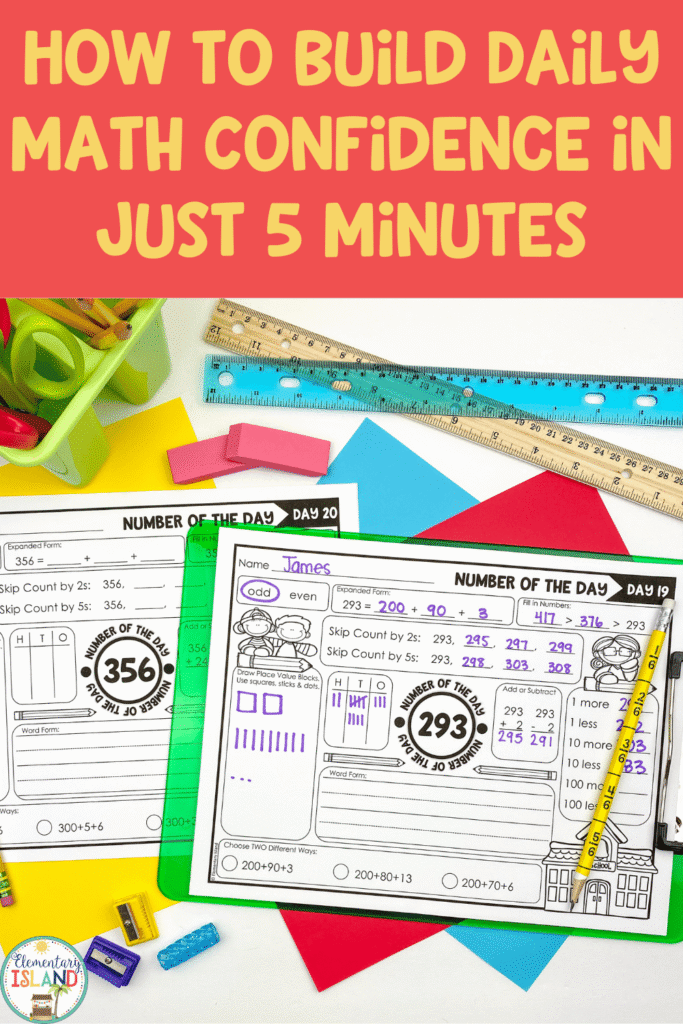
A Number of the Day routine is simple by design. Students focus on one number and explore it in multiple ways. This approach helps build number sense while reinforcing skills students need for everything from word problems to math exams later on.
In a typical five-minute routine, students work through the same set of tasks each day using a new number. Because the format stays consistent, students are not distracted by figuring out directions. Instead, they can focus their energy on the math itself. This predictability is especially helpful at the beginning of the year or when introducing a new skill.
Number of the Day works particularly well for 2nd and 3rd grades, when students are developing a deeper understanding of place value, number relationships, and mental strategies. These concepts form the foundation for future math education.
The Math Skills Students Practice Every Day
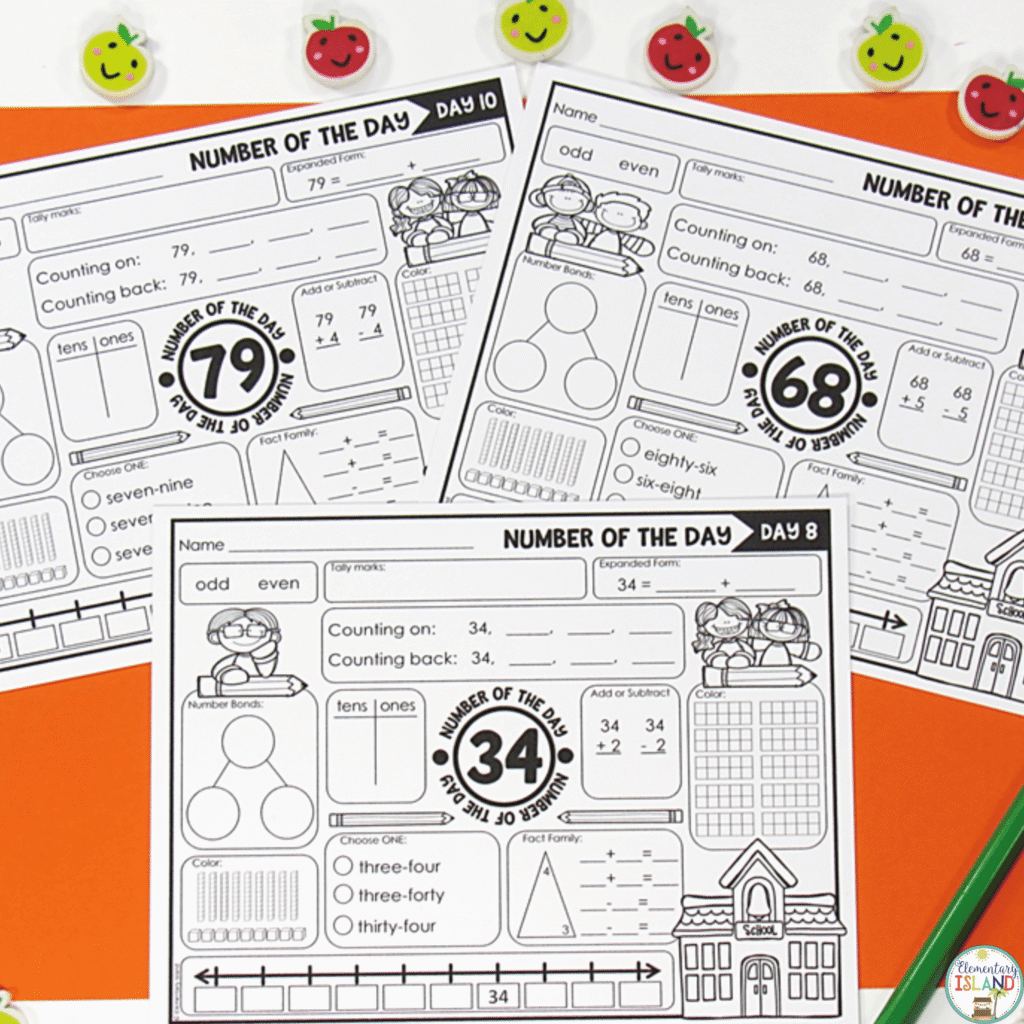
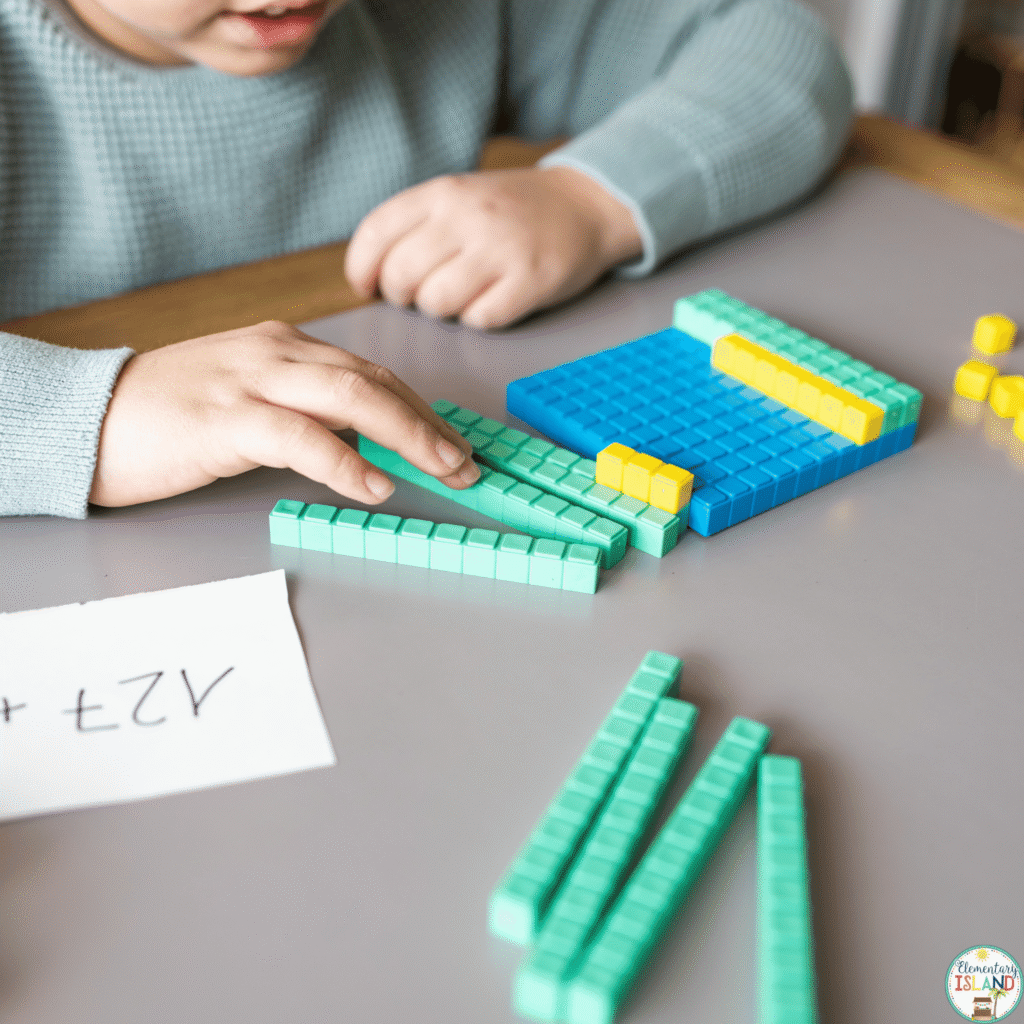
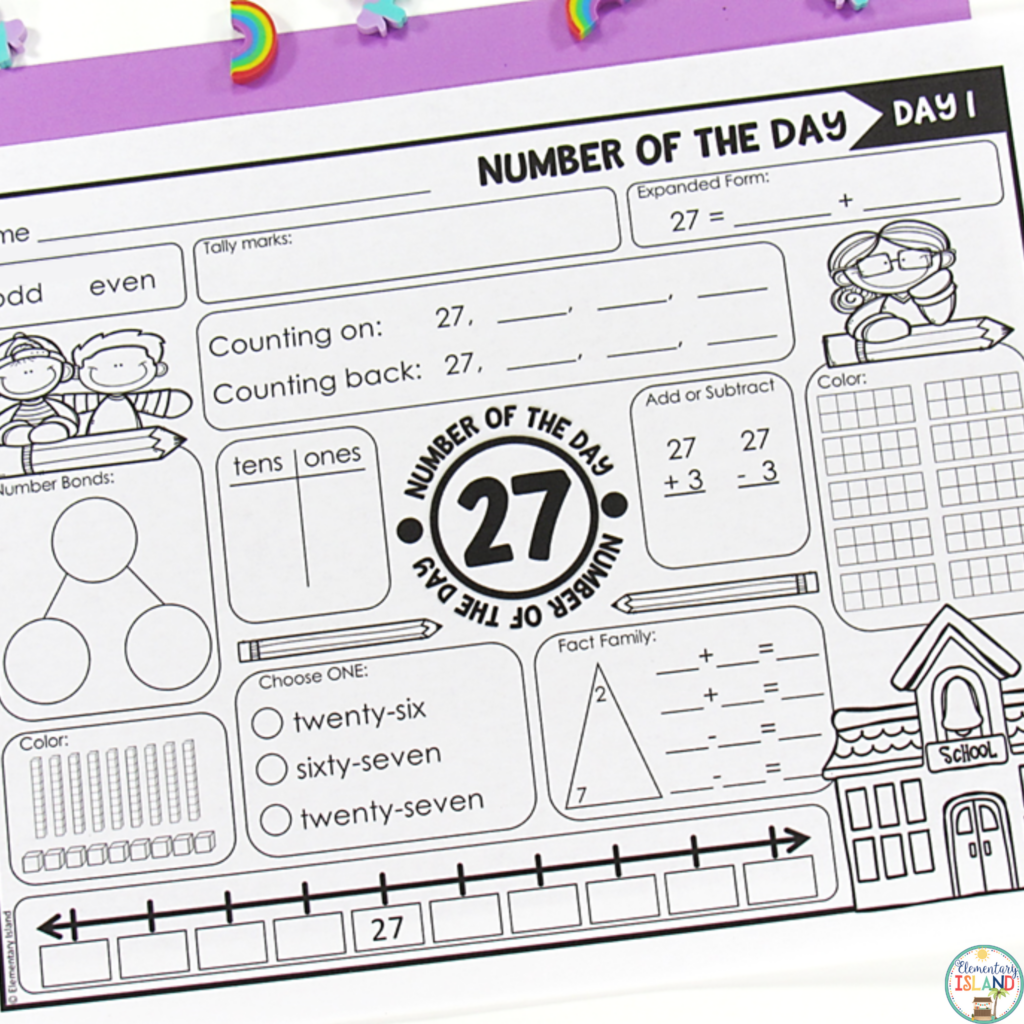
During a Number of the Day routine, students interact with numbers in meaningful ways that support both procedural fluency and conceptual understanding. Many of the activities are based in place value concepts because that helps students build stronger number sense. They may represent the number using base-ten blocks, write it in expanded form, place it on number lines, or compare it to other numbers. Students often practice skip counting, composing and decomposing numbers, and explaining their thinking.
These tasks naturally support math fact fluency without isolating math facts from context. Students begin to see how subtraction facts, multiplication tables, and even division facts connect to larger mathematical concepts. Instead of flipping through flash cards or jumping straight to the back of the book, students are actively making sense of numbers.
Because students revisit similar skills daily, they begin to recognize patterns and relationships. This repeated exposure strengthens mental strategies and helps mathematical concepts stick. This intentional routine is how to build daily math confidence in just 5 minutes.
Where to Fit This Into Your Math Class
One of the biggest benefits of a five-minute Number of the Day routine is how easily it fits into your schedule. Many teachers use it during morning work, at the start of a class period, or as a warm-up before a lesson. It can also be used during transitions or when you need a calm, focused start to math class.

Setting aside time for this routine sends a clear message that math practice matters. A simple timer helps students stay focused and reinforces the idea that this is a short, purposeful study session. Because the routine is familiar, students can begin independently, giving you time to observe or offer quick support.
Over time, this consistency builds confidence and reduces resistance to math class. Students walk in knowing they can be successful.
Why Mental Math Is a Key Part of the Routine
Mental math calculation is one of the most powerful tools for building confidence. When students learn efficient strategies like breaking apart numbers, using friendly numbers, or visualizing with number lines, they realize there is more than one way to solve a problem.
These strategies give students ownership over their thinking. Instead of relying on memorized procedures, they develop flexibility and independence. This is especially important when students encounter new concepts or unfamiliar word problems.
Daily routines that emphasize mental math help students move beyond surface-level understanding. They begin to connect ideas across math skills, which supports deeper learning and long-term retention.
Using Number of the Day as a Quick Check for Understanding
Number of the Day routines are also a great way to review skills and check understanding without pressure. As students work, you can quickly see who understands the concept and who may need additional support. This allows you to adjust instruction before gaps grow larger.
Because the tasks feel approachable, students are more willing to try. Even reluctant learners engage because the routine does not feel overwhelming. These quick checks give you valuable insight while keeping the focus on growth rather than grades.
Building Math Confidence Through Small Wins
One of the most overlooked parts of math success is emotional safety. Students need to feel capable before they can fully engage with challenging math problems. When math is presented in short, predictable routines, students begin to see success as achievable.

Number of the Day activities help students experience daily wins. They are not racing through worksheets or comparing themselves to others. Instead, they work at their own pace and build confidence through consistent practice. This shift in mindset changes the culture of your math class.
Math becomes something students can improve at, not something they are either good or bad at.
Free Number of the Day Practice for 2nd and 3rd Grade
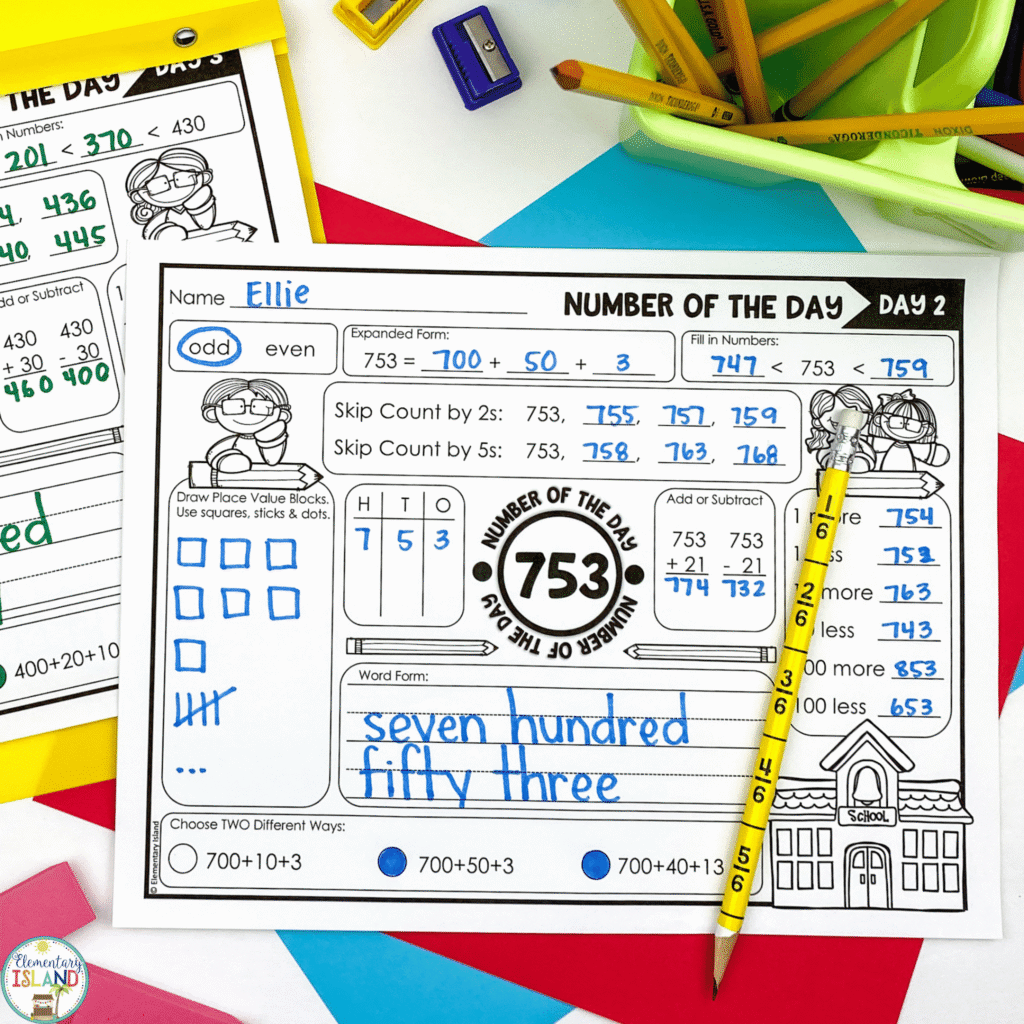
If you are ready to start building daily math confidence in just five minutes, I have a free resource to help you get started. You can download free 2- and 3-digit Number of the Day practice pages designed specifically for 2nd and 3rd grades. These worksheets make it easy to strengthen number sense, review math facts, and support conceptual understanding in a simple, consistent way.
Why These Five Minutes Matter
At the end of the day, building daily math confidence in just five minutes is not about adding more to your plate. It is about using time intentionally. These short routines help students develop strong math skills, reduce math anxiety, and build habits that support long-term math success.
Those five minutes are where confidence grows, strategies develop, and students begin to believe they can do hard things in math. And that belief makes all the difference.
Save for Later
If you’re not quite ready to dive in or you want to come back to these ideas when you’re planning your math routine, pin this to your favorite math Pinterest board. You’ll be able to quickly come back so you can put these ideas into practice for your students. Stop asking how to build daily math confidence in just 5 minutes and starting doing with a Number of the Day routine your students will love.